
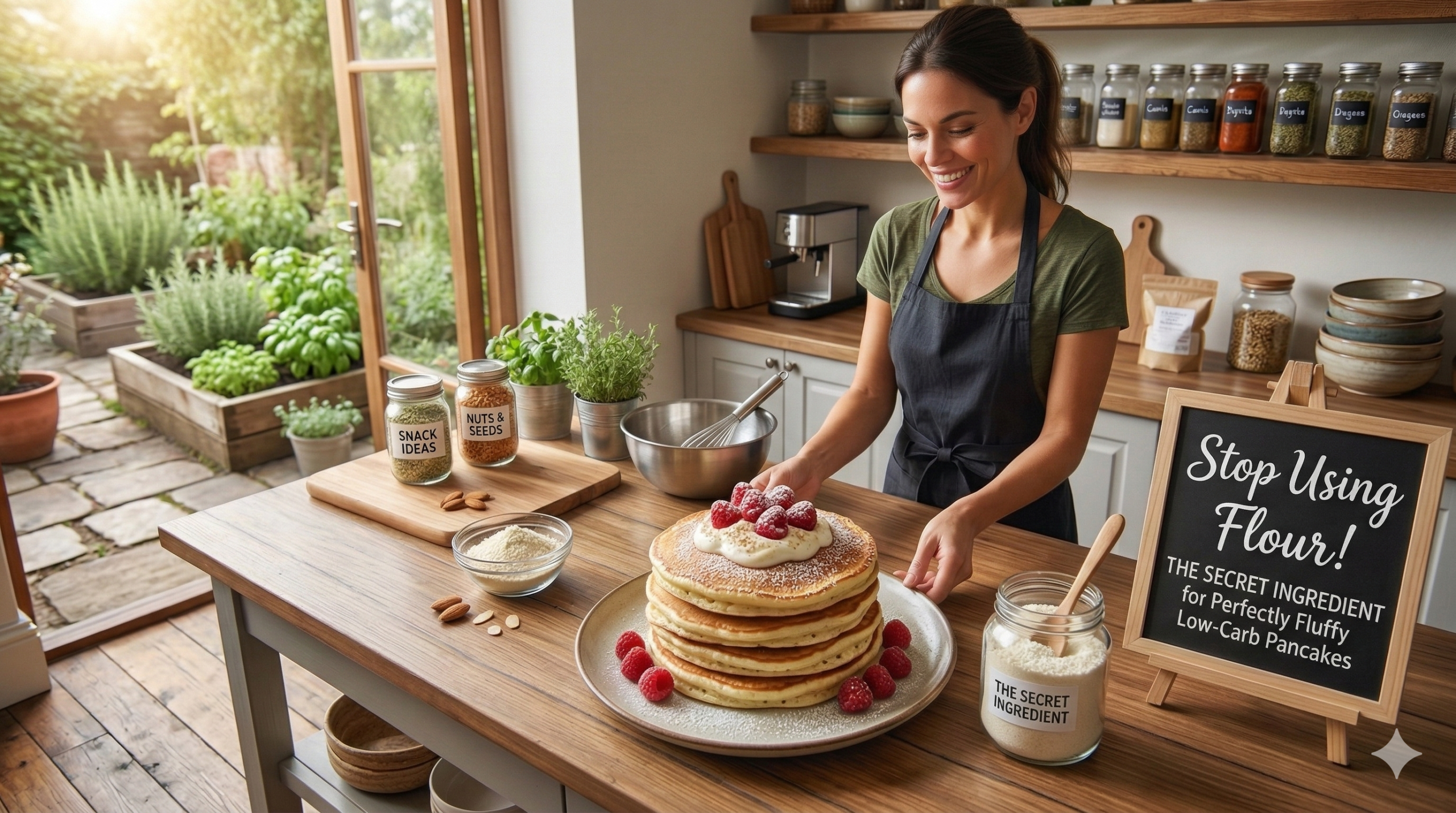
Forget everything you know about low-carb pancakes. This unexpected kitchen staple creates the fluffiest, most satisfying stack you’ve ever made—without a single grain of flour.
The Low-Carb Pancake Problem
Let’s be honest. Most low-carb pancakes are disappointing.
They’re dense. They’re eggy. They fall apart when you flip them. They taste like a sad imitation of the real thing.
You’ve probably tried almond flour versions that came out heavy as hockey pucks. Or coconut flour attempts that were dry and crumbly. Maybe you gave up entirely, convincing yourself that fluffy pancakes and low-carb living simply don’t mix.
I’m here to tell you: you were using the wrong ingredient.
The Secret Ingredient: Cottage Cheese
Yes, cottage cheese.
Before you click away in disbelief, hear me out. When blended until completely smooth, cottage cheese transforms into a magical pancake base that delivers everything you’ve been missing:
- Light, fluffy texture that rivals traditional pancakes
- High protein content to keep you full for hours
- Subtle tanginess that tastes like buttermilk pancakes
- Moisture that prevents that dreaded dry, cardboard quality
- Structure that holds together perfectly in the pan
One cup of cottage cheese contains roughly 28 grams of protein and only 6 grams of carbs. Combined with eggs and a small amount of low-carb flour, it creates pancakes so good that your carb-eating family members will steal them off your plate.
This isn’t some weird diet food hack. This is genuinely delicious breakfast.
The Recipe: Fluffy Cottage Cheese Pancakes
Yields: 8-10 pancakes (2 servings)
Net Carbs: Approximately 4g per serving
Prep Time: 5 minutes
Cook Time: 15 minutes
Ingredients
- 1 cup (225g) full-fat cottage cheese
- 3 large eggs
- ½ cup (50g) almond flour
- 1 tablespoon sweetener (erythritol, monk fruit, or stevia)
- 1 teaspoon vanilla extract
- ½ teaspoon baking powder
- ¼ teaspoon cinnamon (optional)
- Pinch of salt
- Butter or coconut oil for cooking
Instructions
Step 1: Blend Until Smooth
Add cottage cheese, eggs, almond flour, sweetener, vanilla, baking powder, cinnamon, and salt to a blender. Blend for 30-45 seconds until completely smooth. No lumps should remain.
This step is crucial. Lumpy batter makes lumpy pancakes.
Step 2: Rest the Batter
Let the batter sit for 2-3 minutes. This allows the almond flour to absorb moisture and the baking powder to activate. The batter will thicken slightly.
Step 3: Heat Your Pan
Place a non-stick skillet or griddle over medium-low heat. Add a small amount of butter.
Medium-low is key. Too hot and the outside burns before the inside cooks.
Step 4: Pour and Cook
Pour approximately ¼ cup of batter per pancake. Cook until bubbles form on the surface and the edges look set—about 2-3 minutes.
Step 5: The Flip
Gently flip and cook for another 1-2 minutes until golden brown. These pancakes are more delicate than traditional ones, so use a thin spatula and flip with confidence.
Step 6: Serve Immediately
Stack, top with butter, sugar-free syrup, or fresh berries, and enjoy while warm.
Why This Works: The Science
Traditional pancakes rely on gluten—the protein in wheat flour—to create structure and that signature fluffy chew. Without gluten, low-carb pancakes typically collapse into dense, rubbery discs.
Cottage cheese solves this problem in three ways:
1. Protein Structure
The casein protein in cottage cheese provides structural support similar to gluten, helping pancakes hold their shape and rise properly.
2. Moisture Balance
Cottage cheese contains just enough liquid to create tender pancakes without making them soggy. It’s the Goldilocks of pancake moisture.
3. Air Incorporation
When blended, cottage cheese incorporates tiny air bubbles that expand during cooking, creating genuine fluffiness—not just thickness.
The eggs reinforce this structure while the baking powder provides lift. Together, they create pancakes that actually behave like pancakes.
Pro Tips for Pancake Perfection
Use Full-Fat Cottage Cheese
Low-fat versions contain more liquid and less protein, resulting in thinner, less satisfying pancakes. Full-fat is worth the minimal extra calories.
Blend Thoroughly
Any remaining cottage cheese curds will create an unpleasant texture. Blend until the batter is silky smooth—no shortcuts here.
Control Your Heat
These pancakes need gentle heat to cook evenly. If your pan is too hot, the outside will burn while the center stays raw. Patience pays off.
Don’t Press Down
Resist the urge to flatten pancakes with your spatula. Pressing removes the air you’ve worked to incorporate and creates dense, sad pancakes.
Size Matters
Smaller pancakes (3-4 inches) flip more easily than large ones. Start small until you get the hang of it.
Make Them Ahead
These pancakes refrigerate well for 3-4 days and freeze beautifully for up to 2 months. Reheat in a toaster for quick weekday breakfasts.
Delicious Variations
Once you’ve mastered the basic recipe, try these twists:
Blueberry Pancakes
Gently fold ¼ cup fresh blueberries into the batter after blending. Don’t blend the berries—they’ll turn your pancakes purple.
Chocolate Chip
Add 2 tablespoons sugar-free chocolate chips to the batter. Lily’s brand works perfectly.
Cinnamon Roll
Increase cinnamon to 1 teaspoon and swirl a mixture of butter, sweetener, and extra cinnamon into each pancake as it cooks.
Lemon Ricotta Style
Add 1 tablespoon lemon zest and substitute half the cottage cheese with ricotta for an Italian-inspired treat.
Savory Version
Skip the sweetener, vanilla, and cinnamon. Add ¼ cup shredded cheddar, crumbled bacon, and chopped chives. Serve topped with sour cream.
Nutrition Information
Per Serving (4-5 pancakes):
| Nutrient | Amount |
|---|---|
| Calories | 285 |
| Protein | 22g |
| Fat | 19g |
| Total Carbs | 7g |
| Fiber | 3g |
| Net Carbs | 4g |
Compare that to traditional pancakes: 40+ grams of carbs and barely any protein. These aren’t just low-carb—they’re genuinely nutritious.
Common Questions
Can I use Greek yogurt instead?
You can, but the texture will be denser and tangier. Cottage cheese produces fluffier results.
What if I don’t have a blender?
A food processor works well. An immersion blender can work in a pinch, but make sure to blend thoroughly.
Why are my pancakes falling apart?
Either the heat is too high, you’re flipping too early, or the batter wasn’t blended smooth enough. Let those bubbles form before flipping.
Can I double the recipe?
Absolutely. This recipe scales perfectly for feeding a crowd.
My pancakes are too thin. What happened?
The batter may have been over-blended, making it too liquid. Add an extra tablespoon of almond flour next time.
What to Serve With Them
Complete your low-carb breakfast spread:
- Sugar-free maple syrup – Lakanto and ChocZero make excellent options
- Whipped butter – Go generous, it’s low-carb approved
- Fresh berries – Raspberries and blackberries are lowest in carbs
- Crispy bacon – Always a good idea
- Scrambled eggs – Extra protein never hurts
- Whipped cream – Sugar-free, of course
- Nut butter – Almond or peanut butter adds richness
The Bottom Line
You don’t have to give up Saturday morning pancakes just because you’ve gone low-carb. You just have to make them differently.
Cottage cheese might seem like an unlikely hero, but one batch of these pancakes will make you a believer. They’re fluffy, satisfying, high in protein, and taste like actual pancakes—not some disappointing substitute.
Stop mourning your old breakfast favorites. Stop choking down dense, eggy disasters. Stop thinking low-carb means sacrifice.
Grab a container of cottage cheese, fire up your blender, and make pancakes the way they’re meant to be: delicious.
Your taste buds—and your waistline—will thank you.
Tried this recipe? We’d love to hear how it turned out! Share your results and any creative variations in the comments below.