
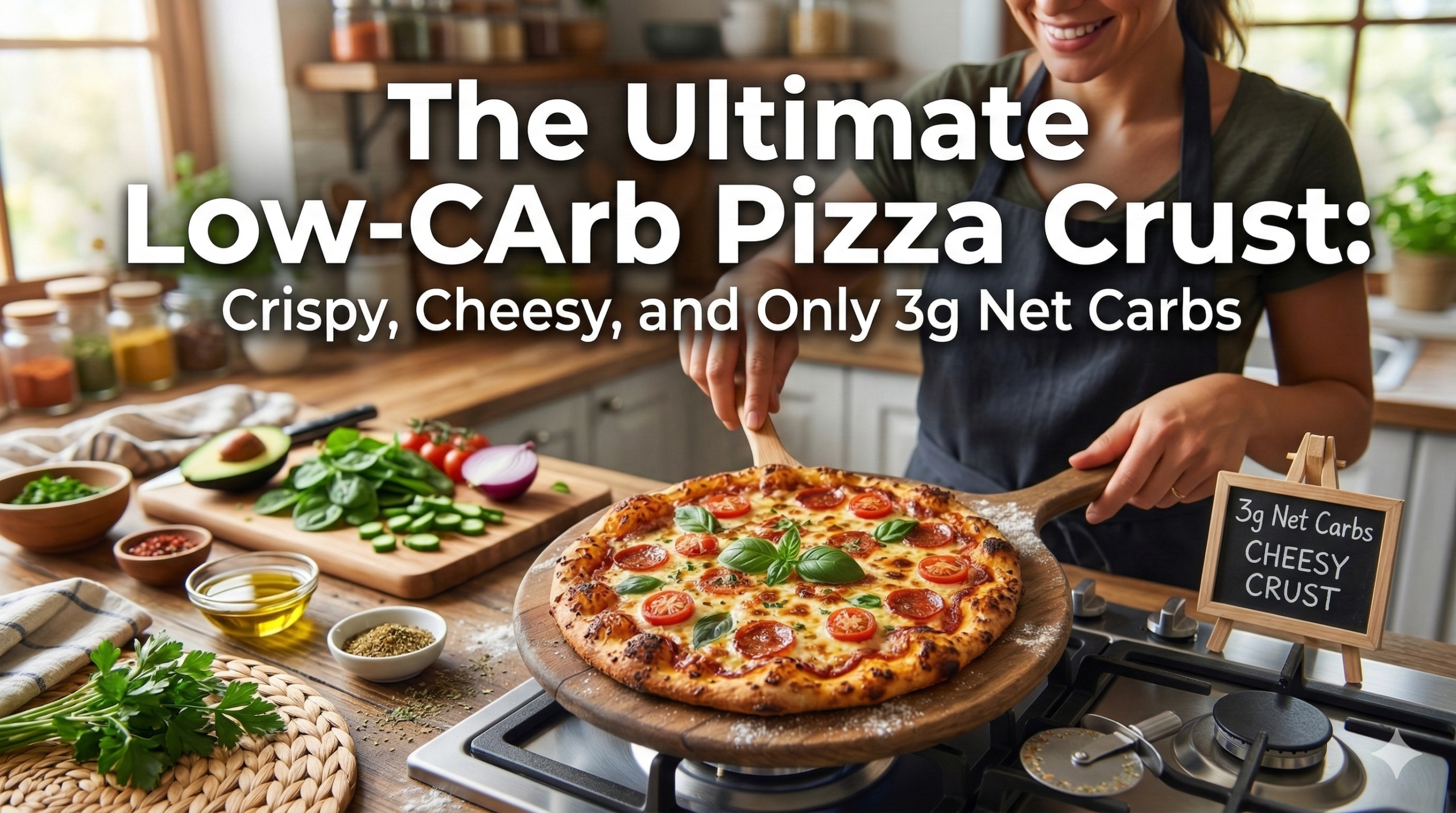
Say goodbye to soggy, disappointing low-carb crusts. This game-changing recipe delivers the crunch you’ve been craving—without the carb guilt.
Introduction: Pizza Night Is Back on the Menu
Let’s be honest: giving up pizza is one of the hardest parts of adopting a low-carb lifestyle. Whether you’re following keto, managing diabetes, or simply trying to cut back on refined carbohydrates, the thought of never enjoying a proper pizza night again can feel like a culinary death sentence.
But here’s the good news—you don’t have to sacrifice pizza anymore.
After countless experiments in my kitchen (and yes, plenty of failures along the way), I’ve finally cracked the code on creating a low-carb pizza crust that actually tastes like pizza. We’re talking crispy edges, a sturdy base that holds your toppings without flopping over, and that satisfying chew we all love. And the best part? Each generous serving contains just 3 grams of net carbs.
Whether you’re in Chicago, London, Manchester, or Miami, this recipe is about to become your new Friday night staple.
Why Most Low-Carb Pizza Crusts Fail (And Why This One Doesn’t)
If you’ve tried low-carb pizza crusts before, you’ve probably encountered the usual suspects: cauliflower crusts that turn into a soggy mess, almond flour bases that crumble at first bite, or cloud bread attempts that taste like nothing at all.
The problem with many recipes is that they try to replicate traditional dough using a single flour substitute. But here’s the truth: no single low-carb ingredient behaves exactly like wheat flour, which contains gluten—the protein responsible for that stretchy, chewy texture we associate with proper pizza.
This recipe works because it combines multiple ingredients that each contribute a specific quality:
- Mozzarella cheese provides stretch and chewiness
- Cream cheese adds moisture and richness
- Almond flour creates structure and a bread-like texture
- Eggs bind everything together
- A small amount of psyllium husk (optional) adds fiber and improves texture
Together, these ingredients create a crust that genuinely mimics traditional pizza—without spiking your blood sugar.
The Ingredients You’ll Need
Before we dive into the method, let’s gather everything you’ll need. All of these ingredients are readily available at major supermarkets across the US and UK, including Walmart, Tesco, Sainsbury’s, Whole Foods, and ASDA.
For the Crust:
- 1½ cups (170g) shredded mozzarella cheese – Use low-moisture mozzarella for best results
- 2 tablespoons (30g) full-fat cream cheese
- ¾ cup (75g) almond flour – Finely ground works best
- 1 large egg, beaten
- ½ teaspoon garlic powder
- ½ teaspoon Italian seasoning (oregano, basil, thyme)
- ¼ teaspoon salt
- 1 teaspoon psyllium husk powder (optional, for extra structure)
For the Toppings (Suggestions):
- 3 tablespoons low-sugar marinara sauce (check the label—many brands are surprisingly high in sugar)
- ½ cup shredded mozzarella
- Your favorite low-carb toppings: pepperoni, mushrooms, bell peppers, olives, fresh basil, Italian sausage
Step-by-Step Instructions
Step 1: Prepare Your Workspace
Preheat your oven to 425°F (220°C) for US readers or Gas Mark 7 for those in the UK. Line a large baking sheet with parchment paper—this is essential for preventing sticking and ensuring easy removal.
Step 2: Create the Cheese Base
In a large microwave-safe bowl, combine the shredded mozzarella and cream cheese. Microwave in 30-second intervals, stirring between each, until fully melted and combined. This usually takes about 1–2 minutes total.
Don’t have a microwave? No problem. Use a double boiler on the stovetop, stirring constantly until smooth.
Step 3: Mix in the Dry Ingredients
Working quickly (the cheese will start to firm up as it cools), add the almond flour, beaten egg, garlic powder, Italian seasoning, salt, and psyllium husk powder if using. Mix thoroughly with a spatula or wooden spoon until a uniform dough forms.
If the cheese cools too much and becomes difficult to work with, pop it back in the microwave for 15–20 seconds to soften.
Step 4: Shape the Crust
Transfer the dough onto your prepared baking sheet. Place another piece of parchment paper on top and use a rolling pin or your hands to press the dough into a circle approximately 10–12 inches in diameter and about ¼ inch thick.
Pro tip: Keep the edges slightly thicker than the center to create that classic pizza crust rim.
Step 5: Pre-Bake the Crust
Here’s the secret to achieving a truly crispy base: pre-bake the crust before adding toppings.
Bake the naked crust for 10–12 minutes until the top appears dry and the edges are just beginning to turn golden brown. Remove from the oven.
Step 6: Add Your Toppings
Spread the marinara sauce evenly over the crust, leaving a small border around the edges. Sprinkle with mozzarella cheese and add your chosen toppings.
Step 7: Final Bake
Return the pizza to the oven and bake for an additional 8–10 minutes, or until the cheese is melted, bubbly, and developing those beautiful golden-brown spots.
Step 8: Rest and Serve
Allow the pizza to cool for 3–5 minutes before slicing. This resting period helps the crust firm up and makes cutting much easier.
Expert Tips for Perfect Results Every Time
1. Don’t Skip the Pre-Bake
I cannot stress this enough. Pre-baking the crust creates a barrier that prevents toppings from making the base soggy. Skip this step, and you’ll end up with a floppy mess.
2. Less Is More with Toppings
Overloading your pizza with toppings will weigh down the crust and prevent it from crisping properly. Stick to 3–4 toppings maximum for best results.
3. Choose Your Cheese Wisely
Not all mozzarella is created equal. Low-moisture, whole-milk mozzarella (often sold in blocks) works far better than fresh mozzarella, which contains too much water. Pre-shredded cheese works fine, though freshly grated tends to melt more smoothly.
4. Get Creative with Seasonings
Once you’ve mastered the basic crust, experiment with different herbs and spices. Try adding:
- Fresh rosemary and sea salt for a focaccia-style base
- Red pepper flakes for a spicy kick
- Everything bagel seasoning for an NYC twist
5. Make It Ahead
This dough can be prepared in advance and refrigerated for up to 3 days, or frozen for up to 2 months. Simply thaw overnight in the refrigerator before shaping and baking.
Nutritional Information (Per Serving)
This recipe makes one 10–12 inch pizza, which serves approximately 4 people.
| Nutrient | Per Serving (¼ pizza, crust only) |
|---|---|
| Calories | 215 |
| Total Fat | 17g |
| Saturated Fat | 6g |
| Protein | 12g |
| Total Carbohydrates | 5g |
| Dietary Fiber | 2g |
| Net Carbs | 3g |
| Sodium | 285mg |
Note: Nutritional values will vary based on specific brands and additional toppings.
Variations to Try
Cauliflower-Cheese Hybrid
For an extra vegetable boost, replace half the almond flour with finely riced, well-drained cauliflower. Make sure to squeeze out every drop of moisture to avoid sogginess.
Dairy-Free Option
Substitute the mozzarella with a high-quality dairy-free cheese alternative (Violife and Kite Hill work well), and use coconut cream instead of cream cheese.
Egg-Free Version
Replace the egg with 2 tablespoons of ground flaxseed mixed with 5 tablespoons of water (let sit for 5 minutes to gel before using).
Frequently Asked Questions
Can I make this crust in advance?
Absolutely. Pre-bake the crust, let it cool completely, then wrap tightly in plastic wrap. Refrigerate for up to 5 days or freeze for up to 2 months. When ready to use, add toppings and bake at 400°F (200°C) until heated through and the cheese is melted.
Why is my crust falling apart?
This usually happens when the cheese cools too quickly before mixing with the other ingredients, or if too much almond flour is added. Make sure to work quickly while the cheese is still warm and pliable.
Can I use coconut flour instead of almond flour?
Coconut flour absorbs significantly more liquid than almond flour, so you’ll need to adjust the quantities. Use approximately 3 tablespoons of coconut flour instead of ¾ cup almond flour, and you may need an additional egg.
Is this crust suitable for diabetics?
With only 3g net carbs per serving, this crust is much lower in carbohydrates than traditional pizza dough, making it a better option for those managing blood sugar levels. However, always consult your healthcare provider regarding your individual dietary needs.
How do I get an extra-crispy crust?
For maximum crispiness, try baking on the lowest oven rack, use a preheated pizza stone, or finish under the grill/broiler for the last 2 minutes.
Reader Reviews
“I’ve been keto for two years, and this is hands-down the best low-carb pizza crust I’ve ever made. My husband couldn’t believe it wasn’t ‘real’ pizza!” — Sarah M., Texas
“Finally, a recipe that actually works! The pre-baking step makes all the difference. My whole family loves it, even the kids.” — James T., Bristol
“I was skeptical about another ‘fathead’ variation, but the addition of psyllium husk really does improve the texture. This is now our weekly Sunday dinner.” — Michelle K., California
Final Thoughts: Enjoying Pizza Without Compromise
Living a low-carb lifestyle doesn’t mean living without the foods you love—it simply means getting creative in the kitchen. This pizza crust recipe proves that with the right technique and ingredients, you can enjoy all the satisfaction of traditional pizza while staying true to your health goals.
The beauty of this recipe lies in its versatility. Whether you prefer classic pepperoni, a sophisticated margherita, or a loaded meat feast, this crust can handle it all. And at just 3 grams of net carbs per serving, you can indulge without the guilt that typically follows pizza night.
So go ahead—preheat that oven, gather your ingredients, and get ready to experience low-carb pizza perfection. Your taste buds (and your waistline) will thank you.
Did you try this recipe? We’d love to hear how it turned out! Share your experience and any creative variations in the comments below. And don’t forget to save this recipe for your next pizza night!
Looking for more low-carb recipes? Check out our guides to keto-friendly bread alternatives, guilt-free desserts, and family dinners that everyone will love—regardless of their dietary preferences.